by
by  I met with a student the other day who said to me “I didn’t finish my Powerpoint presentations because I was SO confused!” He went on to explain that in one class they are working on creating presentations in Powerpoint using more of a Presentation Zen style-minimal words, powerful visual imagery, etc. But then in his other class where he was supposed to create another Powerpoint, he was instructed to include a lot of information in the Powerpoint. Now this is a student who struggles with following directions anyway, but add to that two directly conflicting sets of instructions on two very similar assignments…he was doomed!
Seeing presentations done in a more ‘Zen’ style certainly helps convince me that they are more interesting and informative. Yet the concern has been raised that as educators, especially in International Schools, we routinely are working with individuals who’s native language is not English. Does the same concept apply then? Using minimal words/texts on a slide is great for me, a native English speaker, but if I were trying to follow a presentation in a language that I am not a native/fluent speaker of, I’m not so sure it would have the same effect.
I think being aware of your audience and the purpose behind what you are trying to communicate are key factors when utilizing any presentation style. Garr Reynolds, who blogs about professional presentation design, writes about when he’s asked what is a ‘good’ Powerpoint:
So much depends on how the visual is placed within the context of the presentation, and the content and objectives of that particular presentation are of paramount concern. Without a good knowledge of the place and circumstance, and the content and context of a presentation, it is impossible to say this is “appropriate” and that is “inappropriate.”
 Going back to my confused student above, the class that wanted more information on the Powerpoint was a Modern Language class-where students are not native speakers of the language they are learning/presenting in. The class that wanted a more ‘Zen’ like design was his Humanities class. This goes back to again understanding the purpose and audience for whom the presentation is intended. I feel, too, that there is a personal preference and expertise that comes into play as well. I know for me (who hates doing presentations passionately) I prefer to have a bit more information on a slide to support, inform, and (maybe a bit) distract from looking/listening to me! I also think it is about changing the way we’ve always done things. We’re moving away from the Powerpoints with listed bulleted items (gotta love the bullets, the check marks were my favorite) and moving towards a simpler, more visual presentation style. This change comes with time and an understanding why this style can be a more effective way to communicate. My guess is even people who do a lot of presenting (Jeff and Kim) started out slowly until they developed and expertise of utilizing this visual imagery style of presenting. The rest of us are coming along…maybe a bit more slowly and reluctantly, but we’re coming!
 Something has stuck with me for the last few weeks and I feel the need to vent it out…maybe that’s what a blog is for!??!
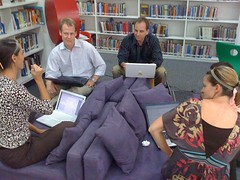 How in the world can we be turning out brand spanking new teachers that have never experimented with these tools in their training? How can any higher education program claim to be training 21st Century Teachers and yet still be graduating students with little to no exposure of current trends in technology? The university he graduated from has one of the best reputations for an education program in the entire state…how is this disconnect happening?
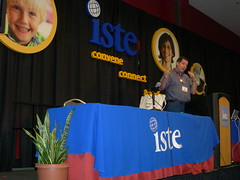 “In the past few years, the preservice teacher education programs have made substantial progress in preparing future teachers in information technology, but they still have a long way to go”
 Sadly, this article was published exactly 10 years ago…seems maybe not enough people read it, or believed it! I keep finding myself becoming discouraged and disheartened. When will education put its foot to the accelerator? What will it take to get future educators prepared and in the driver’s seat? How do we get this car in gear???
 My mother and I are sitting on the
  “The dolphins, accompanied by a handler in small power boats, work at night. If they find an intruder, they swim back to the boat and alert the handler, who places a strobe light on their nose. The dolphin races back and bumps the intruder’s back, knocking the light off. The light floats to the surface, marking the spot.”
 Having been exposed over the years (often against my will) to anything tech related, like
 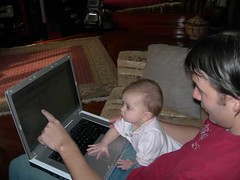 How does this impact our job as counselors? Our role is to assist in preparing students with the skills and attitudes to be successful in life. How do we help students to develop the necessary skills when things are changing so quickly we can’t possibly know what the world will be like? It’s a daunting thought for sure.
 Truth and bias are things we have always struggled with addressing in a classroom, aren’t they? They really are not new concepts that we now have to figure out.
  Clarence